
★★★★★
Velo terrific!
Absolutely fantastic app, great way to track intake. Highly recommend.
Adaptive calorie and macro targets for cyclists and endurance athletes. Velorific reads your training from Strava and TrainingPeaks - what you eat today matches the training you did.
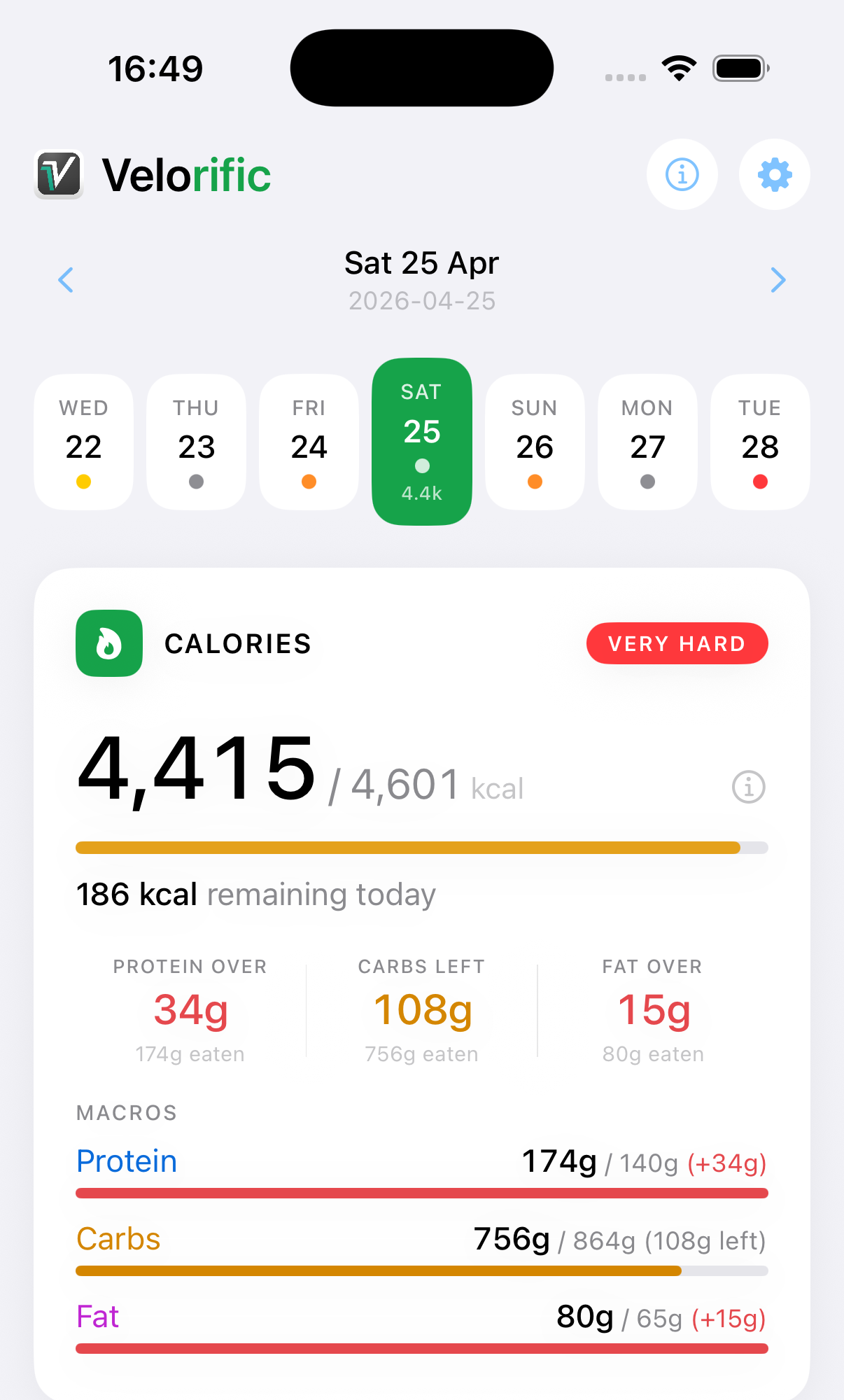
Velorific is built for cyclists and endurance athletes. Your calories and macros adapt to your training load - so you can fuel hard days, recover properly, and avoid overeating on easier days.
Rated 4.8 from 11 ratings on the App Store
Absolutely fantastic app, great way to track intake. Highly recommend.
Amazing and straightforward app. Giving me great insight on my food consumption so I can change my habits accordingly. Very nice!!
Really useful + easy app to keep track of nutrition alongside running etc - definitely helping me fuel better!!
Unlike many calorie counting apps, this is simple and focused on key metrics, not over complicated with detail. I like the Strava and Training Peaks integration and how easy it is to add new foods. I've also found using this has given me more motivation to cut out that evening chocolate (which has been my eternal weakness). Highly recommended.
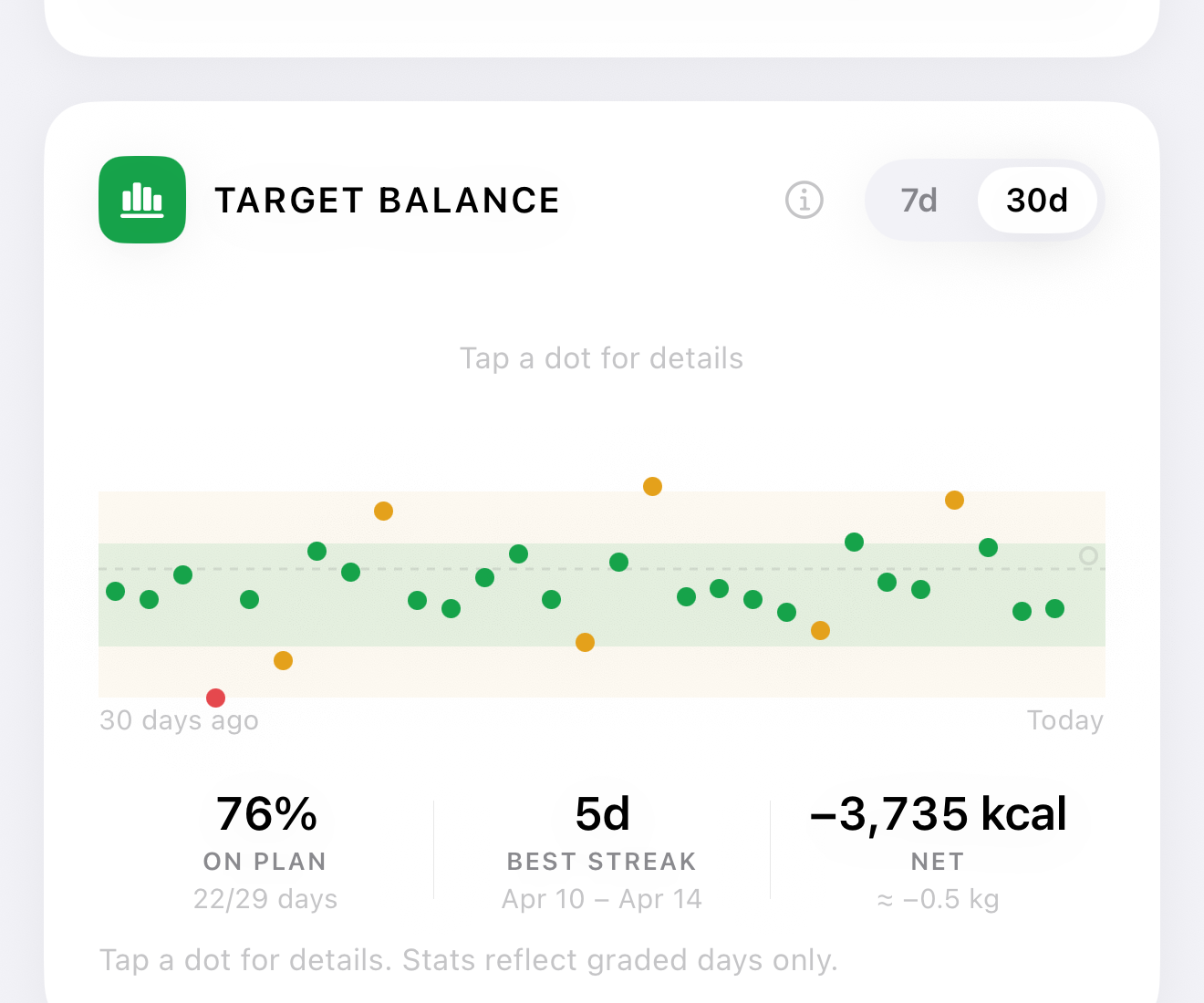
Stay in the green band. Velorific shows the days you got it right.
Each dot is a day. Green = you ate within ~10% of target. Amber = you drifted. Red = you missed by a lot. The maths is on the server, so iOS, Android and the web see the same numbers.
When a workout syncs, today's calorie target updates automatically. Real numbers from a recent ride:
Fuel adjusts automatically based on your training. No manual buttons.
One-tap OAuth. Your workouts flow in automatically; planned sessions feed today's calorie estimate.
Type, search favourites, or paste a description and let AI estimate the macros.
Calories, carbs, and protein adapt to today's training and yesterday's effort. No manual buttons.
iPhone and Android. Free trial, then £4.99/month or £39/year. Cancel anytime.
Existing tester? Sign in to the web app.
Or save with annual. Cancel anytime - Apple or Google handles the trial reminders so you'll never get caught.
Monthly
£4.99 / month
Yearly
£39 / year
Save ~35% vs monthly
Free trial: 1 month on iOS, 14 days on Android. Billed by Apple or Google via in-app purchase. Existing TestFlight testers are grandfathered free for life as a thank-you for shaping the product.
I'm a club cyclist with a background in marathons and ultras.
Most nutrition tools fall into two camps - elite, complex platforms like Hexis, or generic trackers like MyFitnessPal. Neither really works for serious amateurs.
Velorific sits in the middle - linking to Strava and TrainingPeaks to adjust targets daily based on your training.
It has made a significant positive difference to how I fuel and recover.
- Adam
Follow on StravaNo, but it's recommended. Without Strava, Velorific still works as a calorie and macro tracker - you'd log workouts manually. With Strava, your workouts flow in automatically and your daily target adjusts the moment you finish.
No. TrainingPeaks is optional. If you use it, Velorific reads your planned sessions and gives a calorie estimate for the day before you ride - useful for fuelling decisions in the morning. Without TP, the day just updates once Strava syncs.
Yes. Velorific is live on Google Play, at feature parity with the iOS app, with a 14-day free trial.
Your meal, weight, and workout data is yours. We don't sell it, share it, or use it for advertising. Velorific is registered with the UK ICO. The full privacy notice covers what we store, where it's stored, and how to delete it. You can delete your account from inside the app at any time.
Cancel anytime - in your App Store subscription settings on iPhone, or in Google Play subscriptions on Android. The subscription stays active until the period you've already paid for ends.
Yes. The adaptive calorie maths is sport-agnostic - it scales to whatever Strava reports as effort and duration. Cyclists are the primary audience, but several testers run, swim, and do multisport. If your activity is on Strava, Velorific will fuel it.
MyFitnessPal gives you a fixed daily target. Velorific recalculates it every day based on what your training demands. After a hard ride the deficit halves; after a very hard one it waives entirely so you can recover. Macros shift too - carbs scale up on training days, protein stays high. It's built for endurance athletes, not general weight loss.
Velorific is built by an endurance cyclist who got frustrated with generic calorie trackers and adaptive-deficit guesses. Get in touch: adam@velorific.com.